Mallorca’s coastline delivers more variety in a single day than most Mediterranean islands manage in a week. Long, shallow sandy bays sit next to protected dune systems, while steep limestone cliffs frame small coves with water so clear you can see the bottom from the path above. With roughly 250 recorded beaches and coves along more than 500 km of shoreline, the challenge is matching the right one to your group, your tolerance for walking, and the time of year. For help choosing bases, timing your trip, and getting around the island, start with our Mallorca travel guide.
This guide focuses on the shores that consistently rank highest for scenery, water quality, and practical usability, based on current visitor patterns, access rules, and facilities as of late 2026. It prioritizes real conditions over postcard idealization.
This guide focuses on the shores that consistently rank highest for scenery, water quality, and practical usability, based on current visitor patterns, access rules, and facilities as of late 2026. It prioritizes real conditions over postcard idealization.
Quick Comparison of Top Beaches
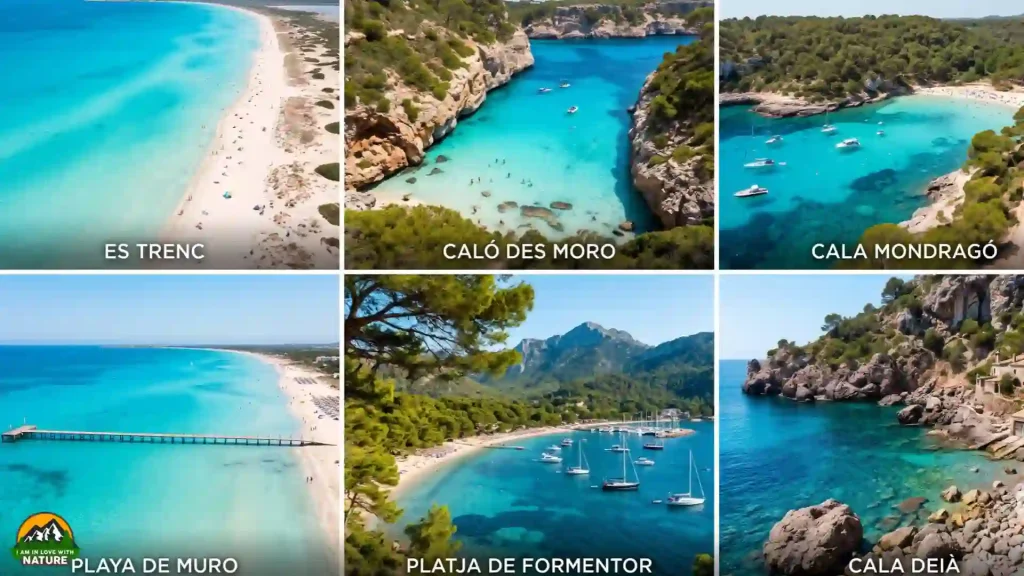
| Beach | Region | Length / Type | Best For | Facilities | Access Notes | Peak Crowds |
| Es Trenc | South | ~2–3 km fine white sand + dunes | Scenery, swimming, couples | Limited chiringuitos, some toilets/showers at access points | Paid parking, fills mid-morning in summer | High July–Aug |
| Caló des Moro | Southeast | Tiny sandy cove | Photos, snorkeling | None on beach | 15–25 min walk + steep stairs from parking | Extreme in peak season |
| Cala Mondragó / S’Amarador | Southeast | Two sheltered sandy coves in natural park | Families, snorkeling | Showers, toilets, seasonal bar; Blue Flag | Official paid parking in summer | Medium–high |
| Playa de Muro / Alcúdia area | North | Long continuous sandy stretch (multiple km) | Families, amenities | Full: lifeguards, showers, toilets, playgrounds, watersports | Easy, multiple access points | High but spreads out |
| Platja de Formentor | North | Narrow pine-backed sand | Scenery, families | Basic seasonal | Regulated vehicle access in peak summer | Medium |
| Cala Deià | West | Small pebble/rocky cove | Atmosphere, views | Rustic beach bars | Steep walk or limited parking | Medium |
Es Trenc: The Long Wild Shore
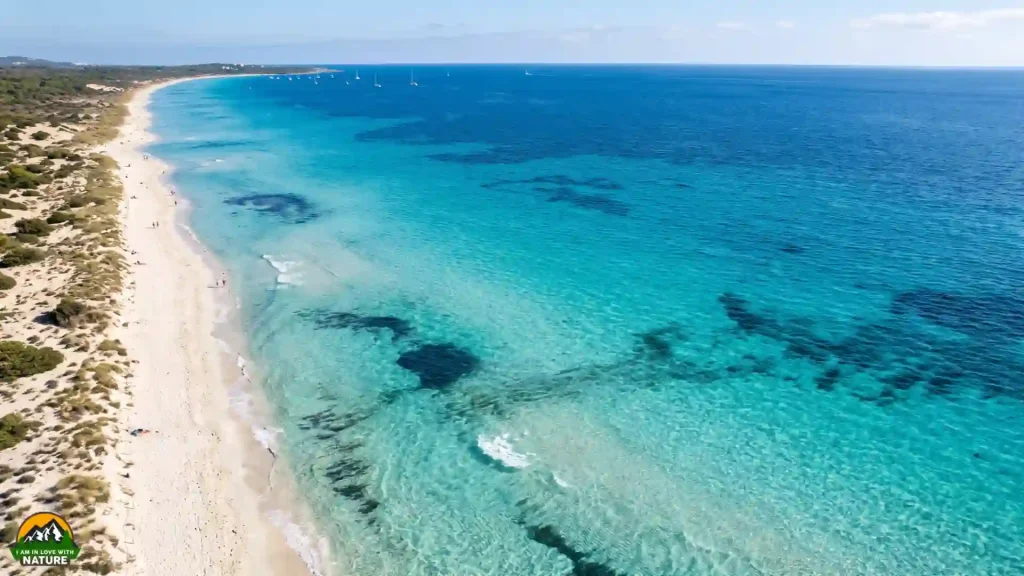
Es Trenc remains the island’s signature undeveloped beach: a broad arc of fine white sand backed by dunes and pine, with shallow water that shifts from pale turquoise near shore to deeper blue farther out. The protected status of the surrounding natural area (including the adjacent salt flats) has prevented hotel development, which is both its appeal and its logistical constraint.
You park in authorized lots at Ses Covetes, Sa Ràpita, or the central access and walk a short distance through the dunes. In July and August those lots routinely fill by late morning. Facilities are deliberately minimal—seasonal lifeguards in busier zones, a few chiringuitos, and portable toilets near main access points—so bring shade, water, and food. The shallow entry makes it workable for families if you arrive early enough to claim space. Walking farther from the main entrances quickly thins the crowds. Sunset light across the open sand is excellent; stay off the dunes and use marked paths.
Caló des Moro and the Southeast Calas
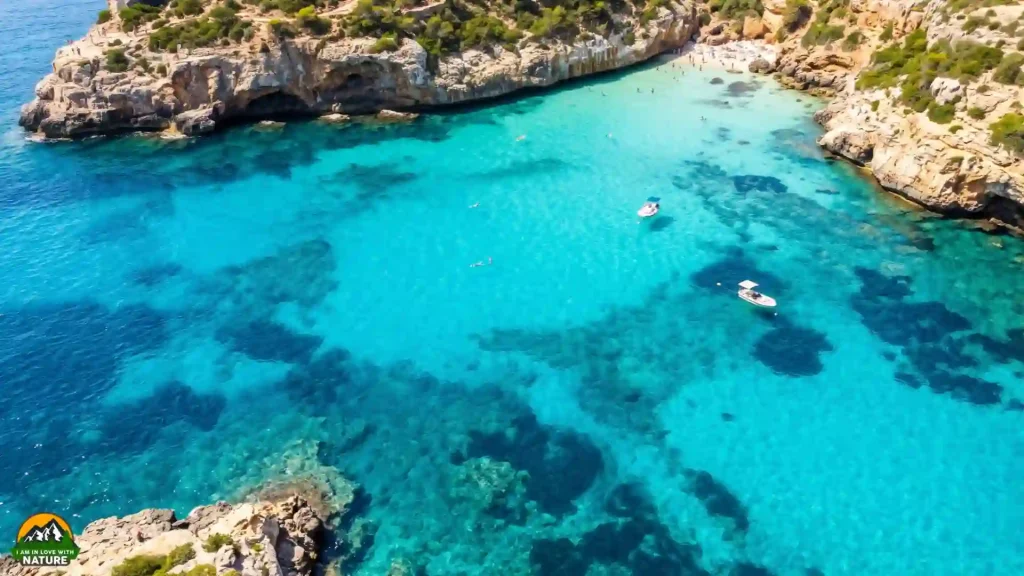
The southeast around Santanyí concentrates some of the island’s most photographed water. Caló des Moro is the clearest example: a narrow strip of sand and rock at the base of steep cliffs, with water that appears almost luminous on calm days. It is also one of the most logistically demanding.
You cannot drive to the cove. Park at the official area near Cala Llombards (free dirt lot), then walk roughly 15–25 minutes, finishing with a steep, uneven rock staircase. There are no toilets, bars, or lifeguards on the sand itself. The space is small, so mid-morning arrivals in July and August often find it packed. Early morning or shoulder-season visits (May–June or September) deliver the version that appears online. Nearby Cala s’Almunia offers a slightly different character and can be combined on the same outing.
A short drive away, Cala Mondragó and the larger neighboring S’Amarador sit inside Mondragó Natural Park. Both are sandy, sheltered, and better equipped than pure wild coves. They hold Blue Flag status, with seasonal lifeguards, showers, toilets, and a simple beach restaurant. Parking is official and paid in summer; it fills later than the most viral spots but still requires an early start on weekends. A short coastal path links the two coves, making them easy to combine. Snorkeling visibility is reliably good.
North Coast: Long Family Beaches and Scenic Pines
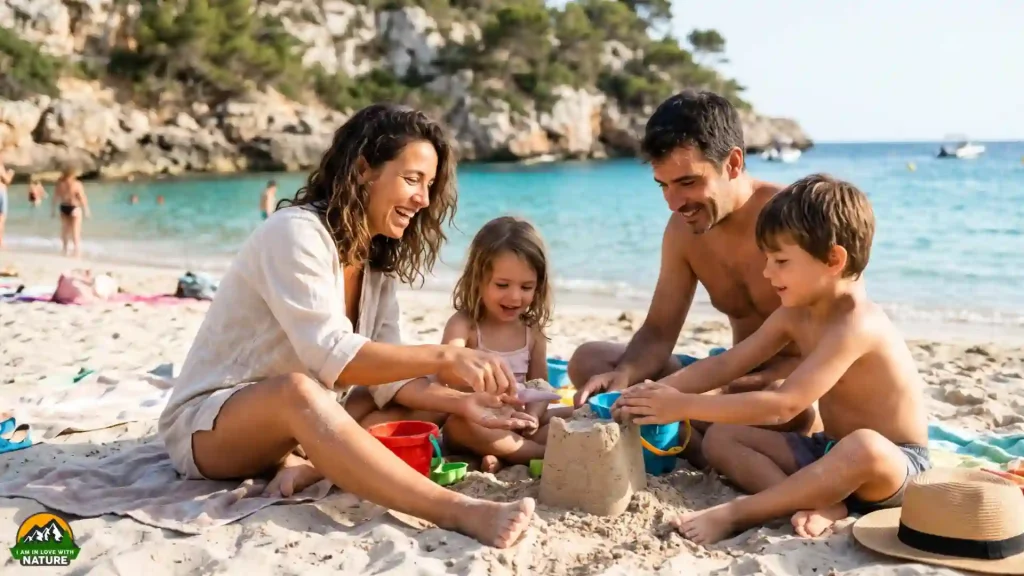
The Bay of Alcúdia delivers Mallorca’s longest continuous sandy shoreline. Playa de Muro and adjacent stretches form a multi-kilometer band of fine sand and gradually shelving water. TripAdvisor rankings have repeatedly placed Playa de Muro among Europe’s higher-rated beaches for its combination of space, shallows, and facilities. Expect lifeguards, showers, toilets, playgrounds, and watersports rentals. Because of the length, it rarely feels as compressed as smaller coves even in peak season. Sections nearer the natural park and dunes feel quieter than the resort ends.
Platja de Formentor sits farther out on the peninsula, a narrow ribbon of sand backed by dense pines with clear, calm water and strong mountain views. Access by car is regulated in peak summer (vehicle caps and timed windows), so early arrival, boat from Port de Pollença, or the seasonal bus are the practical options. It works well for families on calm days thanks to the shallow entry and shade from the trees.
Other Strong Options by Preference
Cala Agulla (northeast, near Cala Ratjada)
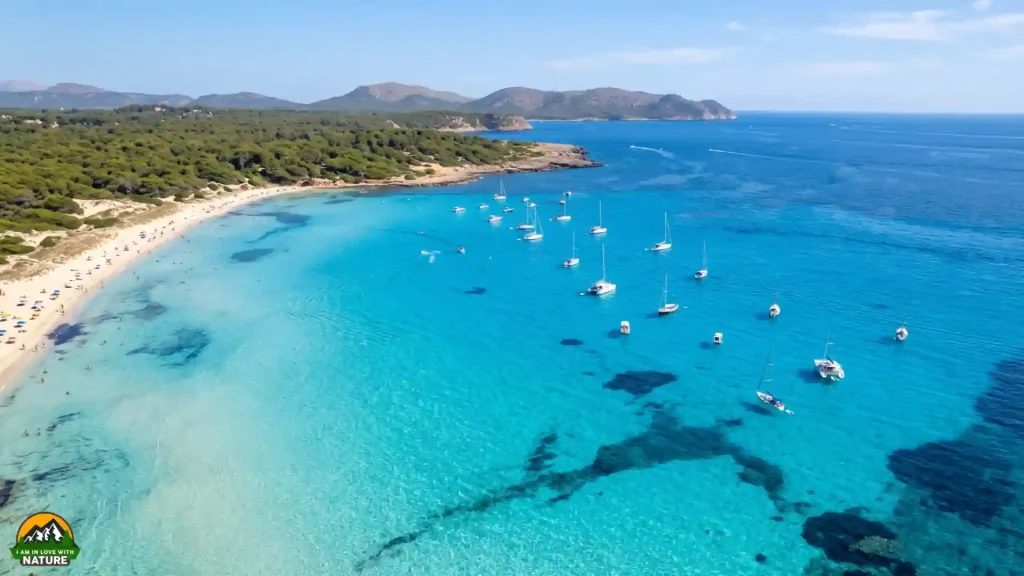
A broad crescent of pale sand (roughly 500 m long) backed by pine forest and low mountains, inside a protected natural area. The water is clear and stays relatively shallow near shore, making it one of the better northeast options for swimming and gentle snorkeling along the rocky ends. Seasonal facilities include sunbeds, umbrellas, a beach bar, toilets, showers, and lifeguards.
Parking is the main friction point. The previous large lot inside the protected area was removed; current options are more limited and fill early in July–August. Arrive before mid-morning or park in Cala Ratjada and walk the short pine path (15–25 minutes). It works well for families who want scenery plus basic services, or for people basing themselves in Cala Ratjada who prefer not to drive far. It gets lively on summer weekends but rarely feels as compressed as the smallest southeast coves.
Cala Deià (west, Tramuntana)
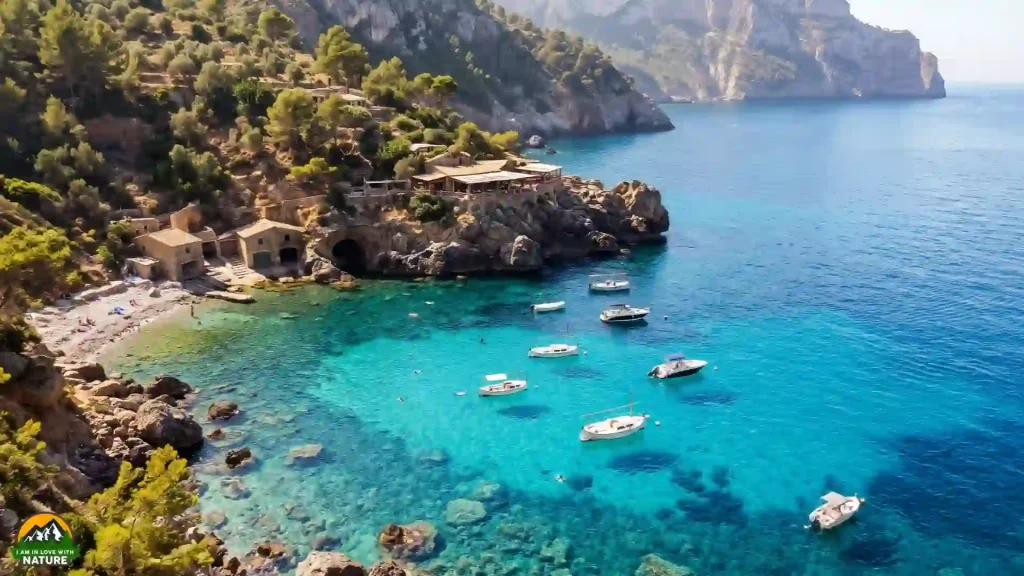
A small pebble-and-rock cove directly below the village of Deià, framed by cliffs and olive terraces. There is almost no sand; water shoes help on the entry. The appeal is the setting and the two rustic seafood restaurants right on the rocks (Ca’s Patró March and Ca’n Lluc), which turn a swim into a longer lunch. Water is clear on calm days and suitable for snorkeling.
Access is either a narrow, winding road down from the village (small paid lot at the bottom that fills early and can be gated when full) or a 20–30-minute downhill walk from Deià’s public parking, with a steeper climb back. Best treated as a half-day stop for scenery, a swim, and food rather than an all-day sand-and-sun base. It is more atmospheric than practical for young children or anyone who wants soft sand and shade.
Cala Varques (east, near Cales de Mallorca)
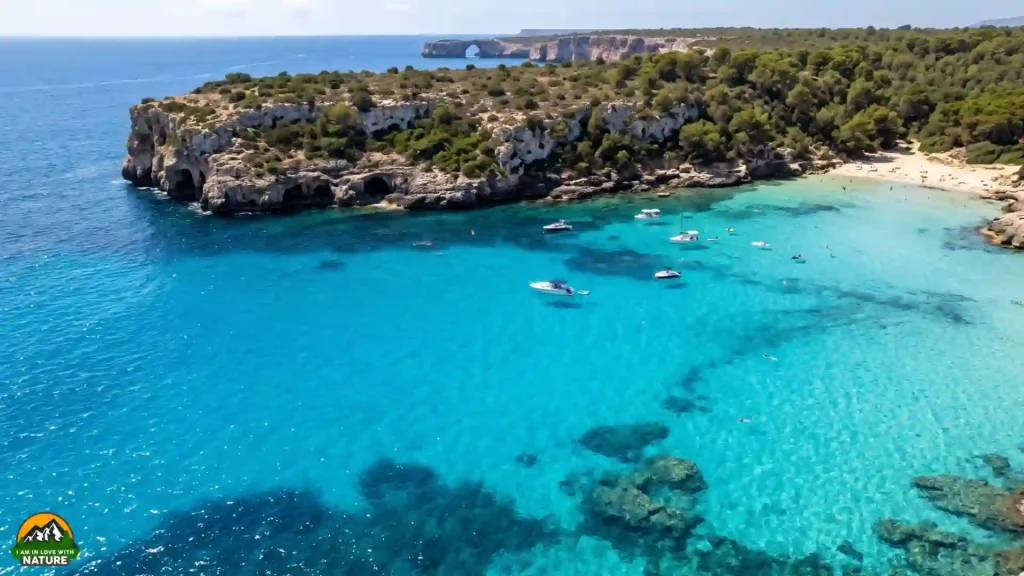
A wild white-sand cove with no buildings, reached only on foot (typically 25–40 minutes each way along a dirt path through pines from the Ma-4014 area) or by boat. There are no facilities of any kind—no toilets, bars, or lifeguards—so you must carry everything in and out. The reward is clear water, a natural rock arch nearby, and both land and sea caves (including sections of Cova des Coloms and others popular with snorkelers and experienced divers).
Parking rules have tightened; roadside spots are monitored and fines are common, so use only designated areas or the longer coastal walk from Cala Romàntica. It is best for confident swimmers and people who like remote, low-development beaches. Not ideal for small children or anyone who needs shade and services. Arrive early in summer; the walk back in the heat is the limiting factor for most visitors.
Portals Vells area (southwest, near Magaluf)
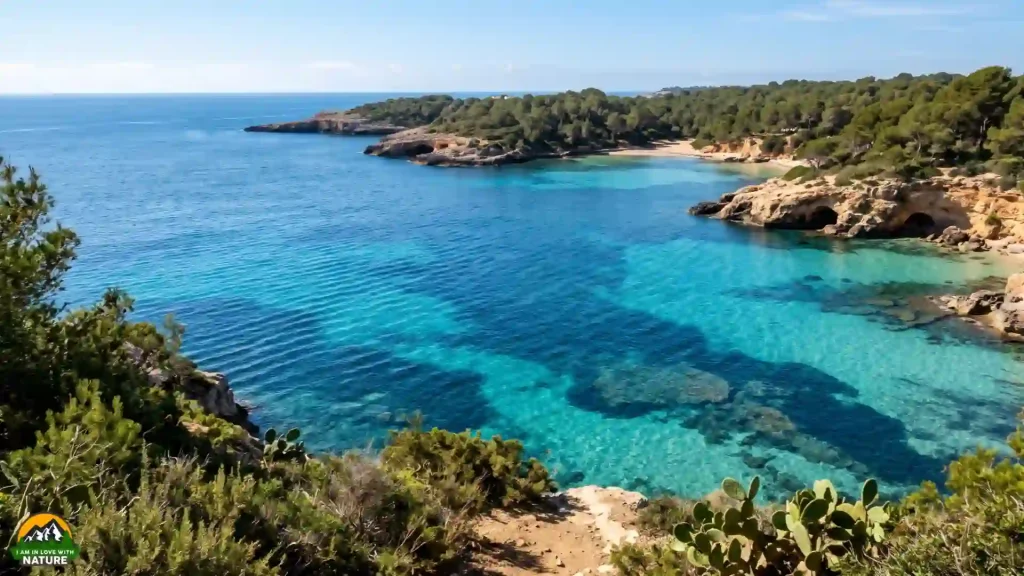
A cluster of three small sandy coves (Portals Vells / Sa Caleta as the main one, plus Platja del Rei and the smaller, more secluded Caló del Mago) set in pine-covered rocky inlets. Water is calm and clear, with good snorkeling along the edges. The main cove has a seasonal chiringuito, toilets, and sunbed rental; the smaller ones are more basic. Free parking exists nearby but fills by late morning in peak season; the final access road is narrow.
It sits only a short drive from Magaluf yet feels markedly quieter and more contained, especially outside July–August. Easy enough for families on the main beach, while Caló del Mago has a longstanding naturist-friendly reputation. A short walk links the coves, and there is a historic quarry cave nearby that some visitors detour to. Practical choice when you want clear water and a natural setting without driving all the way to the southeast or north.
Practical Planning Notes
Timing:
Water temperatures become comfortable for most people from late May or June and stay warm well into September and often early October. July and August bring the warmest sea and longest days but also the densest crowds and highest parking pressure. September frequently offers the best overall balance for beach-focused trips: warm water, fewer school-holiday groups, and slightly easier logistics. May and early June work well if you prefer milder air temperatures and thinner crowds.
Parking and access:
For popular natural beaches, arrive before 9–10 a.m. in July and August or plan a later afternoon visit once day-trippers thin. Use only official lots; illegal verge parking leads to fines. Public buses reach many beaches (especially northern and eastern ones), but a rental car remains the most flexible way to reach multiple spots in one day. Water shoes help on rocky entries.
Blue Flags:
Mallorca held 22 Blue Flag beaches in 2026, covering criteria for water quality, safety, services, and environmental management. Several of the family-oriented northern and eastern stretches, plus Mondragó’s coves, are on the list. The award is a useful signal for facilities and oversight but is not the only measure of water clarity—many protected coves without full facilities still have excellent visibility thanks to Posidonia seagrass meadows.
What to bring:
Shade (umbrella or pop-up), more water than you expect, closed shoes for walking paths, and a bag for trash. Remote coves have no services; even “wild” beaches like Es Trenc have limited options.
Wind:
Local winds (tramuntana from the north, others from the south/southeast) can flatten or chop the water. Check a forecast and shift coasts if one side is rough.
For ideas on combining the beaches with villages, mountain drives, hiking, boat trips, and Palma, see our guide to the best things to do in Mallorca.
Which beach is best if I can only visit one?
Es Trenc for classic long white-sand scenery and swimming. Caló des Moro for a short, high-impact photo and swim stop. Playa de Muro or Mondragó if you want space, shallows, and facilities with children.
Are the beaches safe for kids?
Yes on the long northern sandy stretches and Mondragó (shallow entries, lifeguards in season). Steep-access coves like Caló des Moro are less practical with small children.
Do I need a car?
Not strictly—many beaches have bus links—but a car makes multi-beach days and early arrivals far easier, especially outside the main resort strips.
Is the water really that clear?
On calm days at the southeast calas and Es Trenc, yes. Visibility is often excellent due to the seagrass filtering. After windy periods it can cloud temporarily.
Mallorca’s coastline rewards a little advance planning. Match the beach to your group’s energy level and the day’s conditions, arrive early at the most popular spots, and you will find both the postcard views and the quieter stretches that make the island stand out.