


Canada has 37 national parks and 11 national park reserves, covering about 343,377 square kilometers. The parks below are the ones most travelers can reach and finish without a charter flight.
How these 10 were chosen
Four filters decided the ranking: scenery that holds up in person, roads or shuttles most visitors can use, documented demand or expert rankings, and activities that work for more than expert hikers. U.S. News puts the Rocky Mountain parks first. Parks Canada attendance data agrees on Banff. Arctic parks such as Auyuittuq are extraordinary, but access is by air and expedition logistics, so they sit outside this list.
Top 10 Canadian National Parks at a glance
| Park | Region | Best for | Peak window |
| Banff | Alberta | Lakes, services, first trip | Late June–September |
| Jasper | Alberta | Glaciers, dark skies, space | July–September |
| Yoho | British Columbia | Waterfalls, Emerald Lake | July–September |
| Kootenay | British Columbia | Quieter Rockies, hot springs | June–September |
| Waterton Lakes | Alberta | Border day trip, wildlife | June–September |
| Pacific Rim | British Columbia | Beaches, rainforest, surf | May–September |
| Gros Morne | Newfoundland and Labrador | Fjord, exposed mantle | June–September |
| Cape Breton Highlands | Nova Scotia | Cabot Trail, coastal hikes | June–October |
| Kluane | Yukon | Icefields, flightseeing | June–August |
| Fundy | New Brunswick | Bay of Fundy tides, quiet trails | June–September |
Youth 17 and under enter free. At Banff, a daily adult fee is $12.25 CAD and a family or group vehicle pass is $24.50 CAD. The Discovery Pass is $83.50 for an adult and $167.50 for a family or group. It covers more than 80 Parks Canada places for 12 months.
1. Banff National Park, Alberta

Banff is Canada’s oldest national park, set aside in 1885, and still the one most people mean when they picture the country. It covers 6,641 square kilometers on the eastern slopes of the Rockies. Lake Louise and Moraine Lake get their color from glacial rock flour. On a clear day the water looks dyed. Visitor footage shows the same reaction: the color does not look real until you are on the shore.
Top activities:
- Canoe or walk the Lake Louise shoreline. The lake is too cold for a real swim.
- Reach Moraine Lake by shuttle, bus, or tour in season. Private vehicles are not allowed on Moraine Lake Road while that rule is in effect. Confirm the current access notice before you go.
- Ride the Banff Gondola up Sulphur Mountain, then soak at Banff Upper Hot Springs.
- Walk Johnston Canyon’s catwalks at opening time, or continue to the Ink Pots.
- Drive the Icefields Parkway for Peyto Lake, Bow Lake, and wildlife pullouts.
- Ski Lake Louise, Sunshine Village, or Mount Norquay in winter.
Best time:
Late June through September for open trails and lakes. September usually balances access with thinner crowds than midsummer. February is the strongest ski month for most visitors.
Pro tip:
Shuttle seats for Lake Louise and Moraine Lake go first. Book when the reservation window opens.
2. Jasper National Park, Alberta

Jasper is larger than Banff and usually quieter. The townsite sits inside the park. The Royal Astronomical Society of Canada designated it a dark-sky preserve in 2011. The preserve covers more than 11,000 square kilometers and is widely ranked the second-largest, not the largest, in the world. Maligne Lake, Athabasca Falls, and the Columbia Icefield are the anchors.
The July 2024 wildfire damaged or destroyed 358 structures in town and cut visitation. Parks Canada counted 1,142,080 visits in 2024–25, about half the year before. Reported 2025–26 figures put Jasper near 2.4 million again, so that drop was the fire year, not the current baseline. By September 21, 2026, Parks Canada listed no burned lots still holding debris, 369 of 375 fire-impacted properties certified safe, 70 at occupancy, and 94 under construction. Major roads and many trails have reopened. Some pockets have not. Check the Jasper recovery dashboard before you lock flights.
Top activities:
- Stop at Athabasca Falls and Sunwapta Falls along the Icefields Parkway.
- Join a guided walk or Ice Explorer tour on the Athabasca Glacier. Unguided travel on the ice is unsafe.
- Boat Maligne Lake. Spirit Island is a boat destination, not a roadside view.
- Watch for elk, sheep, and bears at dawn and dusk.
- Stay past dark in autumn, when smoke is less likely and the preserve earns the stop.
- Day-hike Valley of the Five Lakes or Old Fort Point if you want a shorter trail.
Best time:
July to September, once high routes have melted out.
Pro tip:
Confirm open trails and lodging on the official recovery page. Do not rely on a blog post, including this one, for a same-week closure.
3. Yoho National Park, British Columbia

Yoho starts just west of Lake Louise. The name is a Cree expression of awe. Takakkaw Falls is the reason most people use it. The measured main drop is about 254 meters. Total-height estimates run from roughly 302 to 373 meters, so ignore any single number presented as exact. Once the Yoho Valley Road is open, the base is a short walk from the parking area. Emerald Lake is the other half of the visit: a canoe in the morning, the shoreline path when the wind stays down.
The Burgess Shale fossil beds are part of the Canadian Rocky Mountain Parks World Heritage Site. You can see them only on a guided hike.
Top activities:
- Walk to the base of Takakkaw Falls.
- Canoe Emerald Lake or circle the shore.
- Book a guided Burgess Shale hike if fossils are the point of the trip.
- Stop at Natural Bridge on the drive in.
- Hike Wapta Falls for a wider waterfall and fewer people.
Best time:
July through September.
Pro tip:
Yoho and Banff share a border. One pass day can cover Lake Louise and Emerald Lake if you start early.
4. Kootenay National Park, British Columbia
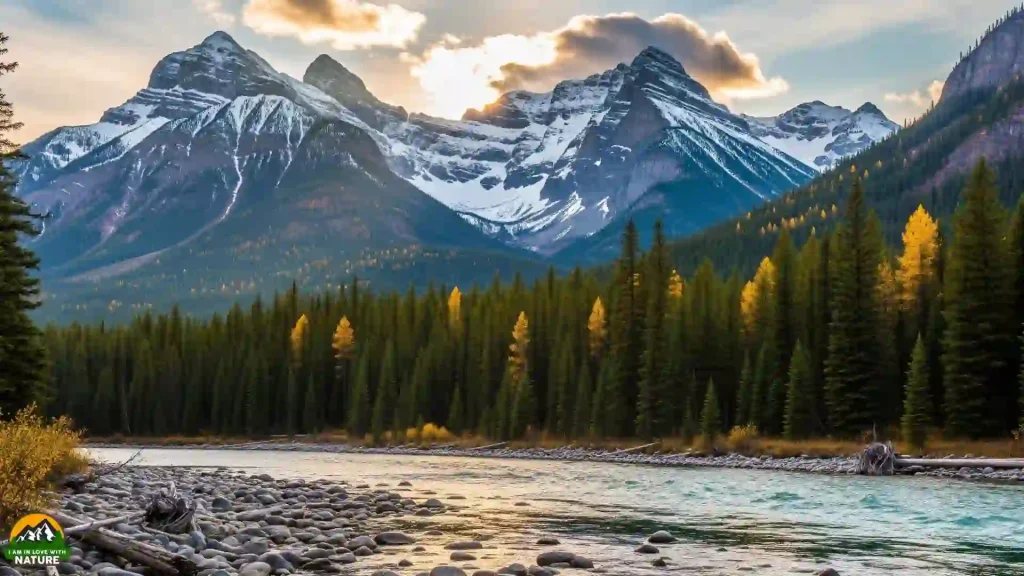
Kootenay is the Rockies park people drive through and underestimate. Highway 93 runs the length of it. Marble Canyon, the Paint Pots, and the Stanley Glacier trail all sit close to the road. Radium Hot Springs, at the south gate, is the recovery stop after the hike. Visitor counts sit well below Banff, which is the practical advantage.
Top activities:
- Soak at Radium Hot Springs.
- Walk Marble Canyon and the Paint Pots. Both are short.
- Hike Stanley Glacier. Carry bear spray and make noise.
- Use the highway viewpoints if you only have a few hours.
- Snowshoe roadside trails in winter when the road is open.
Best time:
June through September.
Pro tip:
Add Kootenay when Banff parking looks impossible. The signature stops are still a short walk from the car.
5. Waterton Lakes National Park, Alberta

Waterton is the Canadian side of the Waterton-Glacier International Peace Park. At 505 square kilometers, it is the smallest of the Rocky Mountain national parks, which makes wildlife watching more concentrated. Bighorn sheep and deer are routine on Red Rock Parkway. Black bears show up often enough that the park’s own advice is worth reading before you hike.
The Prince of Wales Hotel overlooks Upper Waterton Lake. Boat tours run the lake. Continuing toward Glacier National Park waters requires a passport.
Top activities:
- Drive Red Rock Parkway and Akamina Parkway.
- Take the Upper Waterton Lake boat cruise.
- Hike Bear’s Hump for a short, steep view, or Crypt Lake for a full day with boat access.
- Walk the town shoreline under the hotel.
- Scan open slopes for sheep and bears from the road.
Best time:
June through September. Wildflowers are strongest in July.
Pro tip:
If you are already in Glacier National Park, Waterton is the logical full-day extension. A passport is not optional if the boat or your own plan crosses the border.
6. Pacific Rim National Park Reserve, British Columbia
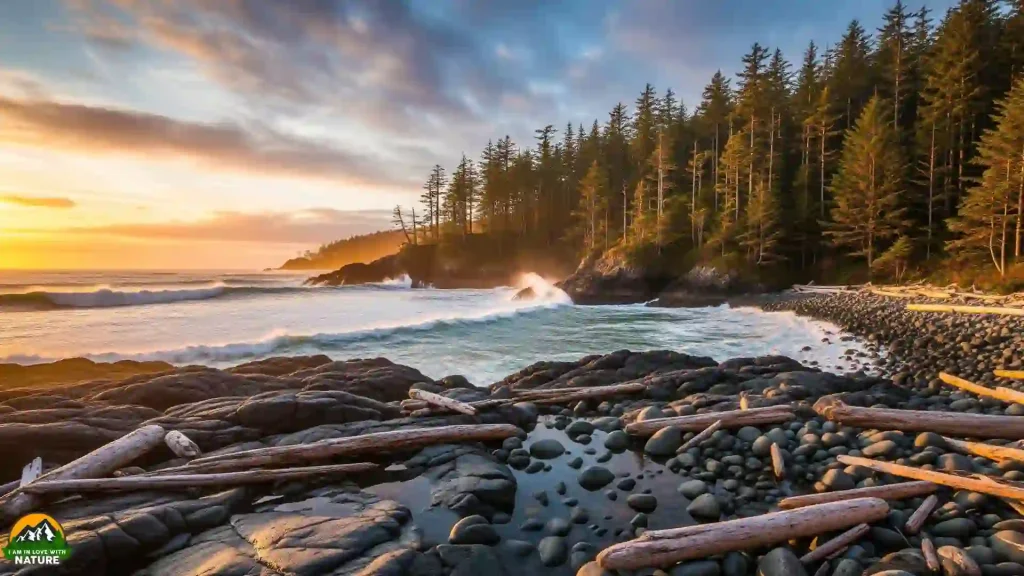
Pacific Rim sits on the west coast of Vancouver Island in three units: Long Beach, the Broken Group Islands, and the West Coast Trail. It recorded 1,173,986 visits in 2024–25, second among national parks and reserves that year. Long Beach is the part almost every visitor should see. Sea stacks, cold-water surf, and a long sand beach do not need a backcountry permit.
The West Coast Trail is a different trip: 75 kilometers, ladders, mud, and tide windows. Permits are quota-limited.
Top activities:
- Walk Long Beach and Wickaninnish Beach.
- Take the Rainforest or Shorepine Bog boardwalks when it rains, which it will.
- Book a surf lesson. Rent the wetsuit even in August.
- Kayak the Broken Group Islands with a licensed operator.
- Hike the West Coast Trail only with a permit and multi-day experience.
- Look for gray whales in spring from shore or from Tofino and Ucluelet boats.
Best time:
May through September.
Pro tip:
Base yourself in Tofino or Ucluelet and treat Long Beach as the park visit. Leave the West Coast Trail for a separate year.
7. Gros Morne National Park, Newfoundland and Labrador

Gros Morne, on Newfoundland’s west coast, became a UNESCO World Heritage Site in 1987 because the Tablelands expose a piece of Earth’s mantle. The orange rock grows almost nothing, so the walk feels bare next to the green coast. Western Brook Pond is a freshwater fjord cut by glaciers, then cut off from the sea as the land rebounded. Cliffs beside the pond are commonly described at about 600 meters. Confirm the current boat operator and trail status with Parks Canada. A seasonal boat runs the pond after a trail walk to the dock.
Top activities:
- Hike to the Western Brook Pond dock and take the boat.
- Walk the Tablelands trail.
- Attempt Gros Morne Mountain only if you want the park’s hard day hike.
- Watch for moose on the road at dawn and dusk.
- Add coastal time in Rocky Harbour or Trout River.
Best time:
June through September. Boat tours generally run mid-May to mid-October.
Pro tip:
Book the boat before you fly to Newfoundland. The dock trail is extra walking time, not a stroll from the parking lot.
8. Cape Breton Highlands National Park, Nova Scotia
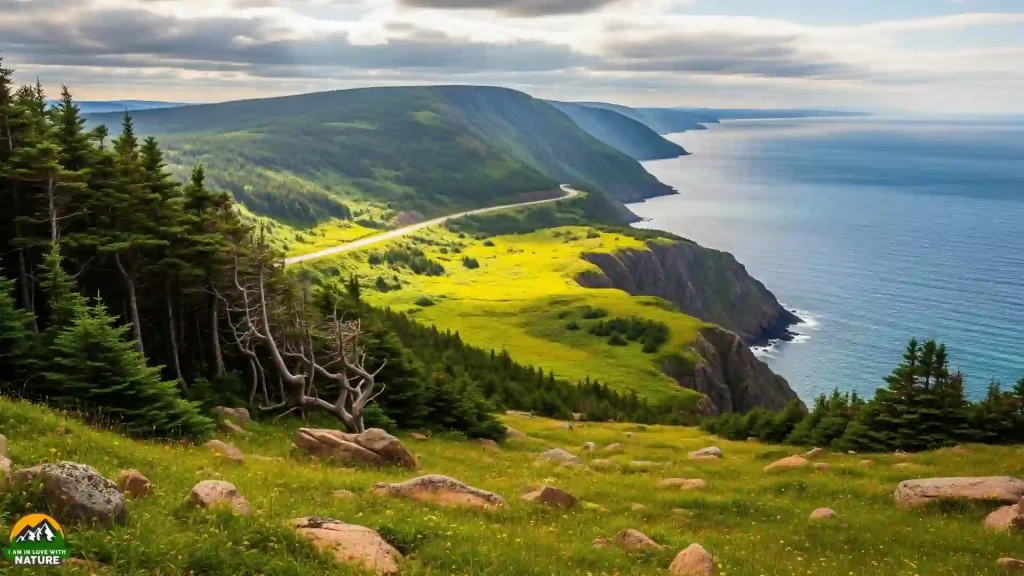
The Cabot Trail crosses this Nova Scotia park, climbing from the Atlantic to a highland plateau. The Skyline Trail is the hike people come for: boardwalk, cliff edge, and ocean below. It is busy at sunset and still worth it. Whale-watching boats leave from harbors just outside the park in summer. Some highland sections of the road can close in heavy snow, but the park is open year-round.
Top activities:
- Drive the Cabot Trail and stop at the coastal pullouts.
- Hike the Skyline Trail. Start early if you want the viewpoint without a line.
- Use Ingonish Beach on calmer days.
- Book a whale-watching trip in summer.
- Time a return visit for late September or early October if fall color is the goal.
Best time:
June through October.
Pro tip:
Choose your driving direction before you start. You want the ocean on the side of the car where you can actually pull off.
9. Kluane National Park and Reserve, Yukon
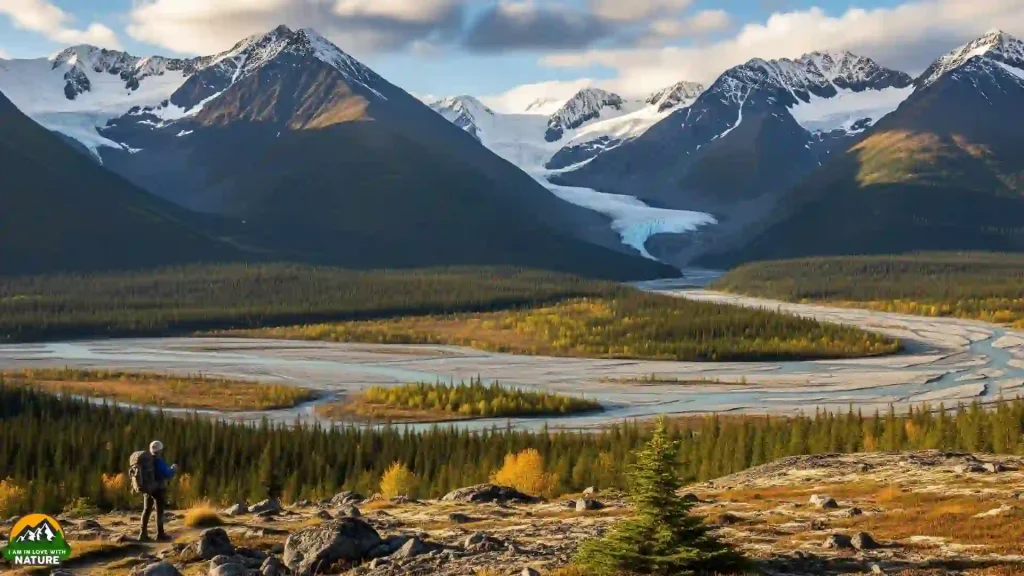
Kluane holds Mount Logan, Canada’s highest peak at 5,959 meters, and a share of the largest non-polar icefield on Earth. It is part of a UNESCO World Heritage Site that continues into Alaska and British Columbia. Almost all of the park is wilderness. The visit most people make is the Alaska Highway edge: Kathleen Lake, short trails, and a flightseeing trip over the ice.
Top activities:
- Book a flightseeing trip over the icefields.
- Camp or paddle at Kathleen Lake.
- Hike front-country trails off the highway.
- Raft a nearby river with a licensed operator.
- Look for Dall sheep from established viewpoints.
Best time:
June through August.
Pro tip:
Do not plan a self-guided interior trip. Kluane’s reward for most visitors is the flight, not a trail network.
10. Fundy National Park, New Brunswick

The Bay of Fundy has some of the highest tides in the world. Rises of more than 10 meters are common around the bay, and some measured peaks elsewhere on the bay run higher. Those headline figures are not a gauge reading inside the national park. At Fundy, you can still walk the exposed seabed near Alma at low tide and watch the same beach vanish a few hours later. The park also has more than 100 kilometers of trail, Dickson Falls, and the Point Wolfe covered bridge. It is an easy add to a Maritime road trip and far quieter than the Rockies.
Top activities:
- Walk the ocean floor at low tide near Alma.
- Hike Dickson Falls and the Point Wolfe area.
- Kayak with a guide when tides and weather allow.
- Birdwatch the coast during migration.
- Pick a half-day trail loop if you want forest without a permit system.
Best time:
June through September, planned around a published tide table.
Pro tip:
Hopewell Rocks is on the same bay and worth seeing, but it is not inside the national park. Build it as a separate stop. Confirm tide times the morning you go.
Fees, passes, and reservations
Regular admission resumes after the Canada Strong Pass free-entry window ends. Youth 17 and under remain free at Parks Canada places. Banff’s daily rates are $12.25 for an adult, $10.75 for a senior, and $24.50 for a family or group in one vehicle.
The Discovery Pass costs $83.50 for an adult, $71.50 for a senior, and $167.50 for a family or group. At Banff’s daily rate, seven adult entries cost $85.75, so the adult pass breaks even at about seven Banff days. Other parks can charge different daily fees, so the math is not identical everywhere.
Campgrounds in Banff, Jasper, and Pacific Rim, plus the Lake Louise and Moraine shuttles, release months ahead and sell out for peak weekends. Hot springs, glacier tours, and fjord boats are extra fees. Verify every rate on the Parks Canada page for that park before you pay. Fees are adjusted on a set cycle.
How to combine parks on one trip
Fly into Calgary and spend four to six days on Banff, Lake Louise, Yoho, and the Icefields Parkway into Jasper. That is the highest-payoff first trip.
Add Kootenay if you want fewer people and a hot-springs afternoon. Add Waterton only if you are entering from the south or have a full extra day.
Pacific Rim needs its own flight or a long drive and ferry to Vancouver Island. Gros Morne and Cape Breton Highlands belong on an Atlantic trip, not a Rockies add-on. Kluane fits an Alaska Highway itinerary. Fundy fits a New Brunswick loop.
Parks Canada’s usual wildlife distances are about 30 meters from deer and sheep and about 100 meters from bears and wolves. Store food in a locker or vehicle, and carry bear spray where the park recommends it. Confirm the current distance rules on the park page. Cell service ends outside the towns.
Which park should you book first?
For a first Canadian national park trip, Banff is the easiest starting point for travelers who want iconic lakes, mountain scenery, extensive visitor services, and road access to nearby parks.
Which is less crowded?
Kootenay and Waterton inside the Rockies. Fundy and Cape Breton Highlands if you can change regions. Jasper is quieter than Banff in a normal year. Visitation has recovered from the fire-year drop, and town rebuilding is still active.
Can you see Banff and Jasper in one day?
You can drive the Icefields Parkway in a day. You cannot see both parks properly. Give the road itself a day, then sleep in Jasper.
Do you need the Discovery Pass?
Buy it if you will enter Banff-priced parks on seven or more days. A single Banff day is cheaper as a daily pass.
The strongest first itinerary is still the Rockies corridor. Save the Atlantic parks and Pacific Rim for the trip where they are the point, not a detour.


