


Bali still rewards first-time visitors. It also punishes sloppy planning. Distances look short on a map. Traffic is not. A visa, a provincial levy, and a digital arrival card are now three separate steps. And the island’s best days usually come from two bases, not one hotel and a string of two-hour transfers.
This guide is built for a first trip: what to complete before you fly, where to sleep, what a day actually costs, and which experiences hold up once the Instagram layer is stripped off.
Before You Fly: The Entry Checklist
Most holidaymakers from outside ASEAN still need a visa. The standard tourist route is Visa on Arrival (VoA) or the same visa applied online as an e-VoA. Both cost IDR 500,000 (about $30–35) and give 30 days, with one 30-day extension for another IDR 500,000. That is a 60-day maximum on this visa type.
Pay the Bali tourist levy separately. It is IDR 150,000 per person (about $9–10), including children, once per arrival into Bali. Pay only on the official provincial site: lovebali.baliprov.go.id. Save the QR voucher. Third-party sites that add a “service fee” are not the government portal.

Complete the free All Indonesia arrival card at allindonesia.imigrasi.go.id within 72 hours before landing. It replaced the old paper card, separate customs form, and health declaration at major airports, including Ngurah Rai (DPS). You get one QR code. Screenshot it. This is not a visa.
Bring all four of these:
- Passport valid at least six months from the day you land, with a blank page
- e-VoA approval or cash/card for airport VoA
- Love Bali levy QR
- All Indonesia QR
- Proof of an onward or return ticket (airlines check this)
Apply for e-VoA on the official immigration portal evisa.imigrasi.go.id. Doing it before you fly usually means a shorter immigration line. Airport VoA still works; it just adds a queue. Eligibility lists have changed since 2022, so confirm your nationality on the official site before you book.
Customs is strict on alcohol (1 liter per adult) and tobacco. Do not improvise with extra bottles in checked bags.
Stay longer than 60 days? Look at a B211A visit visa before departure rather than trying to stretch a VoA. Overstay fines are steep; treat the stamp date as a hard stop.
How to Get to Bali

Almost everyone lands at I Gusti Ngurah Rai International Airport (DPS) in Tuban, just south of Kuta. There is no second international airport on the island.
Long-haul trips usually take 18–22 hours door to door with one stop — commonly Singapore, Kuala Lumpur, Doha, Dubai, or a major Australian city. Round-trip economy in shoulder months often undercuts July–August and the Christmas–New Year spike; treat published fare ranges as moving targets and compare dates rather than locking one number.
After landing: skip the touts in arrivals. Follow signs for official taxi or the Grab/Gojek pickup zone. Blue Bird taxis are a reliable metered backup if the apps surge. A pre-booked hotel or villa transfer costs more and removes the first-night scramble with luggage. Build buffer time. DPS departure banks around midday; international arrivals also bunch near noon.
Best Time to Visit Bali
Coastal days sit in a narrow band, roughly 82–88°F. The real variables are rain, crowds, and price.
May, June, and September are the practical sweet spot: dry-season skies without July–August villa premiums. July and August are the driest and the most expensive. November–March is greener, cheaper, and wetter, with short, hard afternoon storms rather than all-day washouts—except around Christmas and New Year, when prices jump again.
| Month | Weather pattern | Crowds | Best for |
| Jan–Feb | Wet, lush | Low | Budget stays, spa days |
| Apr–May | Drying out | Moderate | First trip, value |
| Jun | Dry | Building | Surf, beaches |
| Jul–Aug | Driest | Peak | Reliable sun if you book early |
| Sep–Oct | Still dry, then turning | Thinning | Honeymoons, photography |
| Nov–Dec | Wet returns; late Dec spike | Mixed | Deals except holiday fortnight |

Nyepi, the Balinese Day of Silence, falls on Monday, March 8, 2027, from about 6:00 a.m. to 6:00 a.m. on 9 March. Ngurah Rai closes. Roads empty. You stay inside your hotel. Do not book a flight on the 8th March. The night before, Sunday, 7 March, ogoh-ogoh processions fill towns with giant demon effigies. If you want that, arrive by the 7th March and leave on the 9th or later. Confirm airline schedules close to travel; Nyepi dates follow the Saka calendar and airport notices can shift by a few hours.
Mount Agung is an active volcano. Check local notices before east-Bali hikes if activity rises.
The island is busy. Ngurah Rai handled about 24.1 million passengers in 2025, and Bali recorded roughly 7.1 million foreign arrivals that year. Australia remains the largest source market. Book July, August, and late December months ahead.
Where to Stay: Pick Two Bases, Not One

There are multiple accommodation options available in Bali. A week spent only in Canggu or only in Ubud is half a trip. Traffic between the south coast and the uplands routinely runs 90–150 minutes. Split the stay.
Ubud is inland: rice terraces, temples, yoga barns, cooler nights, no beach. Stay here for Tegallalang or Jatiluwih, the Monkey Forest, cooking classes, and the Mount Batur pickup. Central Ubud is noisy. Look at Penestanan, Campuhan, or a rice-field lodge 10–15 minutes out if you want sleep.

Canggu is the current energy center: cafes, surf, beach clubs, and chronic congestion. Echo Beach and Batu Bolong are walkable in pieces. A villa “near the beach” two kilometers inland can still cost you 30 minutes at sunset. Some inner Canggu roads limit Grab/Gojek car pickups, so confirm the drop-off point before you book with luggage.
Seminyak is more polished: shopping streets, established beach clubs, easier dining. Good for couples who want a beach without Canggu’s scooter swarm.
Uluwatu / Bukit Peninsula is cliffs, left-hand surf, and sunset temples. It is not walkable. You need a scooter or a driver. Padang Padang, Bingin, and Single Fin are the usual circuit.
Sanur is calmer, flatter, family-friendly, and the main fast-boat dock for Nusa Penida. Nusa Dua is gated resorts and a swimmable beach. Sidemen, Amed, and Munduk are the reset button if you have 10+ days.
Quick match:
- First trip, 7–10 days: 3–4 nights Ubud + 3–4 nights Canggu or Uluwatu
- Surf and nightlife: Canggu, then one Uluwatu sunset
- Families: Sanur or Nusa Dua, with a day trip to Ubud
- Quiet nature: Sidemen or Munduk after the south
Beyond the South: North, East, and the Next Island
The south holds most of the beds. The rest of the island is where the traffic thins.
Sidemen sits under Mount Agung with working rice terraces and almost no beach-club circuit. Munduk is cooler highland air, cloves, and twin lakes. Both work as a two-night reset after Ubud.
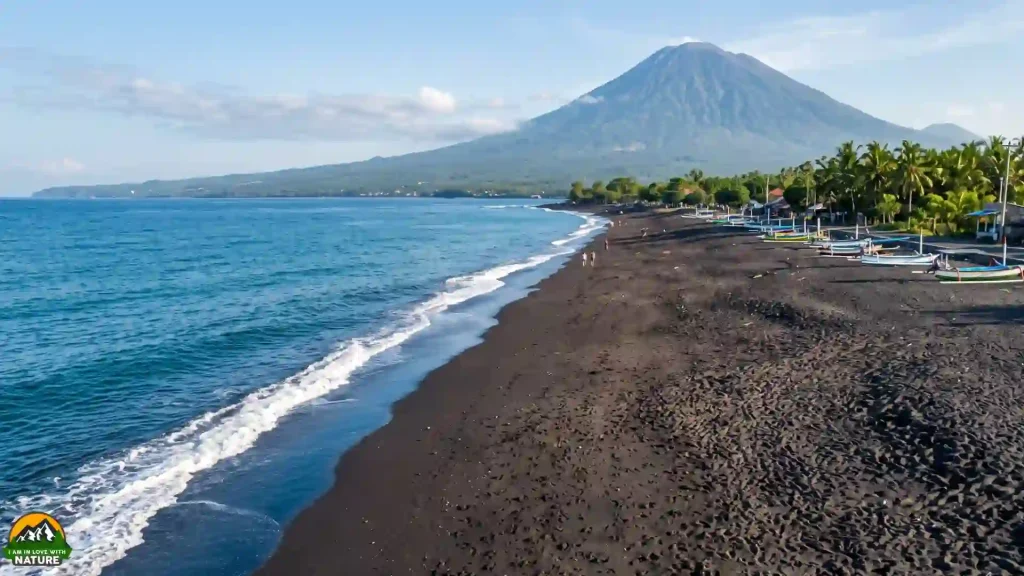
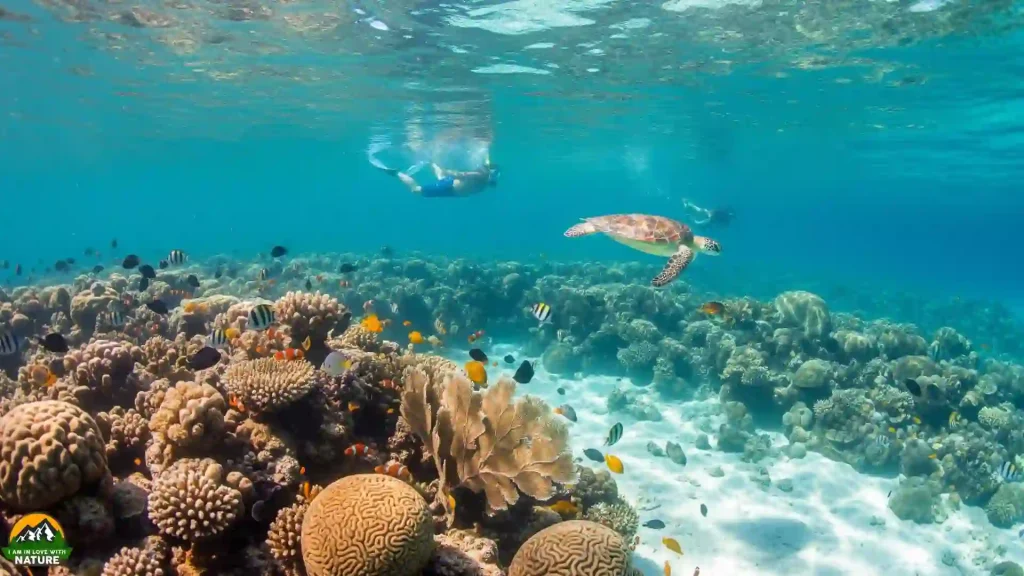
Amed and Tulamben on the northeast coast are black-sand, early nights, and water. Tulamben is home to the USAT Liberty wreck, a World War II cargo ship a short swim off the pebble beach, from roughly 5–30 meters. It is one of the most accessible wreck dives in the region; snorkelers can still see structure in the shallows. Day-tripping from Canggu means a 3-hour each-way drive. Stay a night.
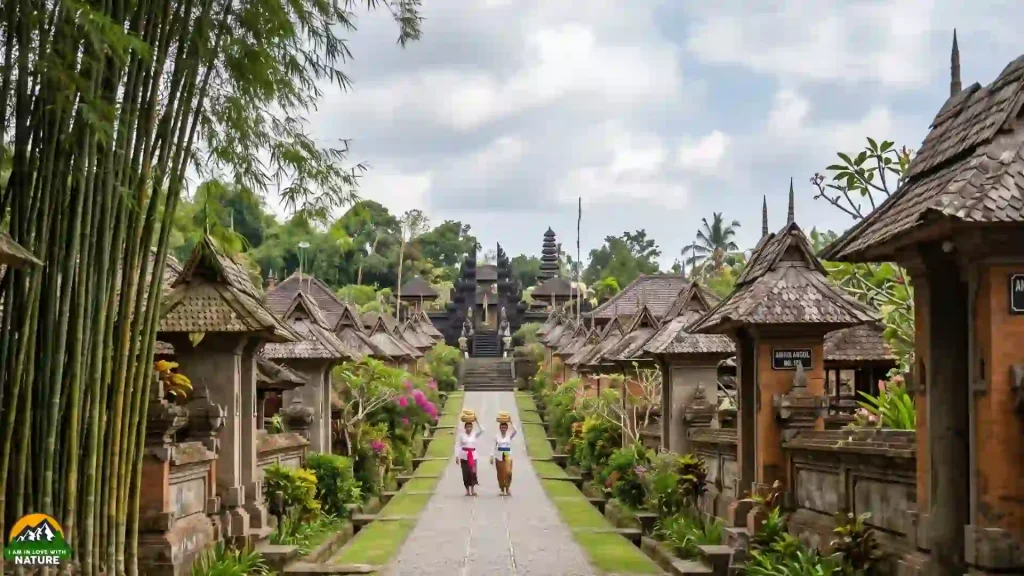
Lovina on the north coast is slower still. Sunrise dolphin boats are popular and hit-or-miss. Pair Lovina with Sekumpul if you want one north-Bali block rather than a south-coast day trip that dies in traffic. Penglipuran, in Bangli, is a preserved village with a single ceremonial street and strict house rules. Go early, dress modestly, and treat it as a living place, not a set. It pairs cleanly with an east-Ubud waterfall day.
Nusa Lembongan is the calmer sibling of Penida: shorter crossings from Sanur, easier snorkeling, less brutal roads. Use it if you want island time without the Kelingking staircase.
West Bali National Park and Menjangan Island sit on the far northwest. The draw is clear-water reef, not nightlife. It is a long transfer from Canggu. Only add it on a 12–14 day trip or if diving is the point.
The Gili Islands are not Bali. They sit off Lombok. Fast boats from Padang Bai or Serangan commonly take 1.5–2.5 hours, longer in swell, with one-way fares often in the IDR 350,000–700,000 band depending on port and operator. Morning crossings are usually kinder. Book ahead in July, August, and late December. If you get seasick, medicate before you board. Do not squeeze Gilis into a 7-day Bali trip.
How Much Bali Costs?
Bali is still inexpensive by Western standards if you eat where locals eat. It is no longer a $15-a-day island if you want air-conditioning, cafes, and tours.
Typical per-person daily ranges reported across budget breakdowns:
| Style | Daily total | What it usually covers |
| Budget | $30–50 | Guesthouse or hostel, warung meals, scooter or short Grab rides |
| Mid-range | $70–120 | Private room or small villa share, mix of warungs and cafes, one activity |
| Comfort | $150–250 | Pool villa or 4-star, restaurants, private driver days |
Useful price anchors (they move with season and neighborhood):
- Warung nasi campur or nasi goreng: IDR 20,000–40,000 ($1.30–2.60)
- Canggu cafe brunch: $7–12
- Scooter rental: IDR 50,000–80,000/day ($3–5), plus fuel
- Private driver, 8–10 hours: often $40–65
- Airport Grab/Gojek to Seminyak/Canggu: commonly in the $8–20 range depending on traffic and surge
- Temple entry (foreign adult): often IDR 50,000–75,000 at major sites such as Tanah Lot and Tirta Empul
Add a one-time entry stack of about $40–45: VoA + levy. A mid-range week, flights excluded, often lands around $600–1,200 per person once you include a couple of paid activities. Couples cut lodging cost per head by sharing a room or villa.
Money tip: Pay card terminals in IDR, not your home currency. Dynamic currency conversion adds a quiet 5–10%. Use ATMs attached to banks. Count cash at official changers and walk if the rate looks magical.
Getting Around Without Losing a Day to Traffic
There is no useful island-wide train. The road network is the bottleneck.
Grab and Gojek work well in the south for short hops. Download both. In parts of Canggu, cars cannot always reach the door. Motorcycle taxis are faster in gridlock; wear the spare helmet.
A private driver is the better buy for temple days, Ubud-to-coast transfers, and anyone with suitcases. Agree on a daily rate, overtime, parking, and tolls on WhatsApp before the engine starts.

Scooters are how the island moves. They are also the main way tourists end up in clinic. To ride legally and keep travel insurance valid, you generally need:
- A home motorcycle license (a car-only license is not enough)
- A matching International Driving Permit
- An SNI helmet on rider and passenger
- The bike’s STNK papers on board
Police checks in Canggu, Seminyak, Kuta, Uluwatu, and Ubud are routine. Fines for no helmet or missing documents commonly start around IDR 250,000. The larger risk is a declined insurance claim after a crash. If you have never ridden in traffic, do not learn on Bali roads.
Photograph the scooter from all sides before you leave the shop. Rental “scratch” disputes are a classic end-of-trip argument.
What Is Actually Worth Doing In Bali?
Skip the 14-stop “Bali in a day” bus. Two or three well-timed stops beat seven rushed ones.
Uluwatu Temple and the Kecak dance
Pura Luhur Uluwatu sits on a cliff about 70 meters above the Indian Ocean. The grounds are a short clifftop walk. The reason to time your visit for late afternoon is the Kecak performance: a circle of male voices chanting as dancers play a Ramayana scene against the sunset. Arrive early. Monkeys steal sunglasses. Cover shoulders and knees; a sarong is expected in temple space.
Rice terraces: Tegallalang early, Jatiluwih if you want space
Tegallalang, north of Ubud, is the postcard terrace. It is also lined with swings and cafes by mid-morning. Go before 9 a.m. Jatiluwih, a longer drive toward the west, is wider, less staged, and better if you want to walk rather than pose.
Tirta Empul and Tanah Lot
Tirta Empul in Tampaksiring is the holy-spring temple where visitors can join a melukat purification if they choose. Foreign adult entry is commonly listed around IDR 75,000, with a sarong and sash included or loaned at the gate. Do not put the dry entry sarong in the water; rent the bathing cloth if you enter the pools. Modest dress is not optional.
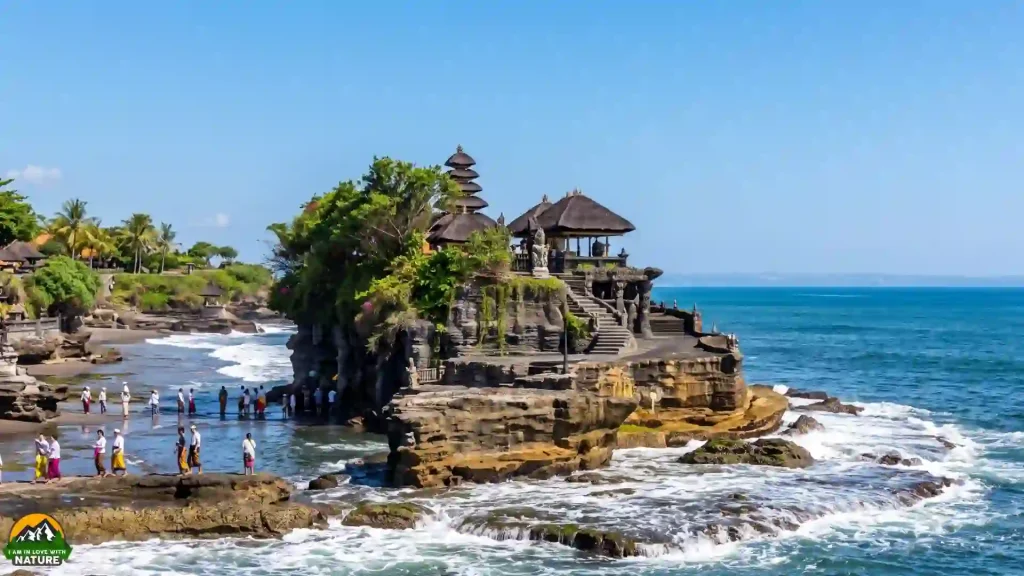
Tanah Lot is the sea-stack temple west of Canggu. Foreign adult tickets are widely listed at IDR 75,000, often cash at the booth. Sunset is beautiful and crowded.
Besakih, the Mother Temple on the slopes of Agung, is larger, higher, and easier to rush through with a pushy unofficial “guide.” Pay official fees only. Women who are menstruating are traditionally asked not to enter inner courtyards. Follow staff instructions without debate.
Sacred Monkey Forest and Ubud Art Market
The Monkey Forest is a short, shaded loop through temples and macaques. Hide phones, glasses, and snacks. Do not feed them. The Art Market is dense and tourist-priced; bargain, then compare with workshops in outlying villages if you care about craft rather than fridge magnets.
Mount Batur sunrise
The climb on this 1,717-meter active volcano starts around 2–3 a.m. and takes roughly two hours in the dark. The payoff is sunrise over the caldera and Mount Agung. It is popular to the point of congestion. A smaller private group is worth the extra cost. Wear real shoes. The summit is cold before the sun hits. Dry-season mornings (April–October) have the best odds of a clear view.
Nusa Penida: overnight beats the day-trip grind
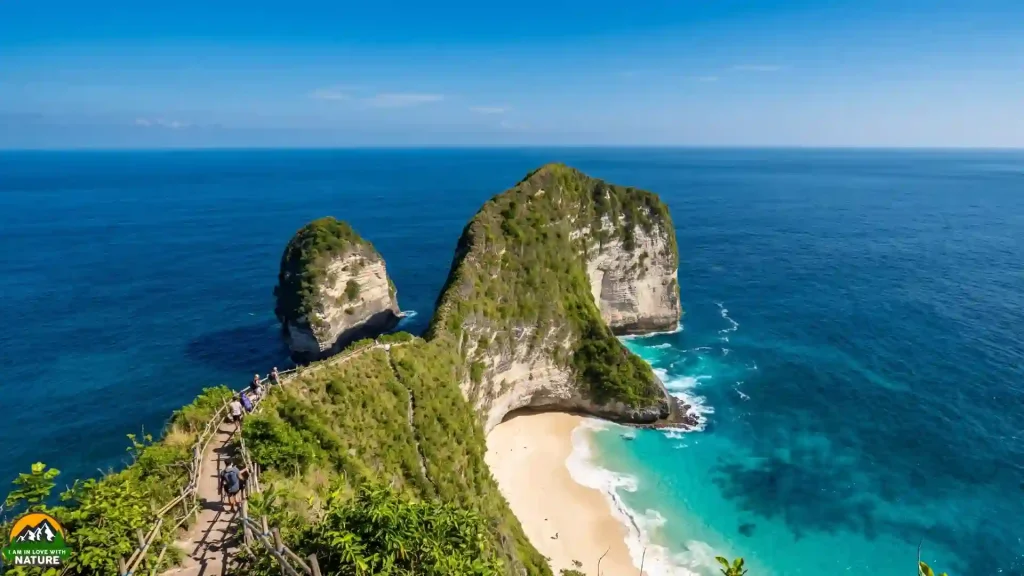
Fast boats from Sanur take about 30–45 minutes. The west-coast circuit—Kelingking (the T-rex headland), Broken Beach, Angel’s Billabong—is the shot list. The hike down Kelingking is steep and exposed. Angel’s Billabong is dangerous in high surf. Manta snorkeling at Manta Point is the marine highlight when conditions cooperate.
Day trips pack too much driving on rough roads into one sweaty window. One night on the island lets you hit Kelingking at opening and the east-coast beaches (Diamond, Atuh) without a sprint back to the last boat.
Beaches and water time

West-coast surf (Canggu, Uluwatu) peaks in dry season. Kuta is the beginner break; Uluwatu reefs are for people who already surf. Sanur and Nusa Dua are calmer for swimming. Waterbom in Kuta is the family water-park option if one person in the group has no interest in temples. Jungle ATV and Ayung River rafting are paid extras from Ubud — fine if you want a half-day thrill, skippable if the calendar is already full.
Waterfalls, Wrecks, and Wilder Water
Tegenungan is the easy waterfall near Ubud: short stairs, swimming possible downstream, packed after 9 a.m. Go at opening or skip it.
Tukad Cepung, about 45–60 minutes from Ubud in Bangli, sits in a canyon. The photograph people want needs sun shafts, usually mid-morning on a clear day, not dawn. Expect some wading. Entry is a modest cash fee at the gate; around IDR 15,000–30,000, so bring small notes and confirm at the booth.
Gitgit, near Singaraja, is the easy north-coast cascade if knees or kids rule out a steep descent.
Sekumpul, in Buleleng, is the one worth a dedicated north-Bali day: a cluster of tall jungle falls, a steep trail, river crossings, and a 2–2.5 hour drive from Ubud. Published fees vary by viewpoint-only versus guided trek, so agree the route before you pay. Closed shoes, not flip-flops. Avoid after heavy rain.
Do not stack Sekumpul, Cepung, and Tegenungan on the same day from Canggu. That is a driving tour with waterfalls attached.
Food to Eat in Bali
Eat babi guling (roast pork), bebek betutu, satay lilit, and nasi campur at warungs. Lawar is the minced-meat and coconut salad that shows up at ceremonies and good local tables. Klepon — pandan rice balls with palm sugar — is the night-market sweet worth hunting.

Jimbaran Bay is the grilled-seafood evening: tables on the sand, price confirmed before the fish hits the coals. Gianyar night market is the better street-food run if you are already inland.
Canggu and Ubud will sell you smoothie bowls all day. Have one. Spend the other meals at warungs. Ask whether there is an Indonesian-language menu; prices can differ. A half-day cooking class in Ubud pays for itself if you want to understand base genep spice paste rather than just photograph it.
Fine dining exists — Ubud’s tasting-menu rooms included — but it is optional. Drink bottled water. Ice at polished cafes is usually fine; ice at anonymous carts is a gamble.
Who This Trip Is For
First-timers with 7–10 days: Ubud plus one south-coast base, one sunset at Uluwatu, optional Penida overnight. Do not add Gilis.
Surfers: Canggu or the Bukit. Check swell before you lock Uluwatu-only lodging.
Families: Sanur or Nusa Dua, private driver, Monkey Forest early, Waterbom if you need a reset day. Skip scooter rental.
Divers: Sleep in Tulamben or Amed. Menjangan only if the calendar is long.
Fourteen days and no checklist panic: add Sidemen or Munduk, then either Penida/Lembongan or a Gili crossing — not both plus Batur plus Sekumpul.
Sample Itineraries
7 days — highlights without the commute death spiral
Days 1–3 Seminyak or Canggu (beach, one club sunset, recover from the flight). Days 4–6 Ubud (terrace at dawn, one temple, Monkey Forest or cooking class). Day 7: Uluwatu and fly, or a last Sanur morning if the flight is late.
10 days — the split that matches the roads
Days 1–4 Ubud (terraces, Tirta Empul or a waterfall, optional Batur). Days 5–8 Canggu or Seminyak. Day 9 Uluwatu. Day 10 Penida west coast or a last south-coast morning — not both.
14 days — room for the north or the next island
Run the 10-day plan, then add two nights in Sidemen, Munduk, or Amed/Tulamben, or two nights on Lembongan or the Gilis. Leave one empty afternoon. Bali gets better when you stop adding pins.
Culture and Etiquette That Changes How You Are Treated
Bali is a living Hindu island, not a theme park that happens to have temples.
- Walk around canang sari offerings on the sidewalk. Do not step over them.
- Dress for temples: shoulders and knees covered, sarong and sash in inner areas.
- Speak quietly in courtyards. Do not climb shrines for photos.
- Use your right hand for giving and receiving.
- Bargain at markets; do not bargain temple donations.
- A small “terima kasih” goes further than a loud complaint about traffic.
The levy you paid is framed by the province as support for culture and environment. Behave as if that is true.
Safety, Scams, Health, and Lighter Impact
Bali’s tourist corridors are generally stable. Petty theft, traffic injuries, and stomach bugs cause more ruined trips than headline crime.
Watch for: money-changer short-changing in Kuta and Legian; scooter deposit arguments; “closed” attractions that restart when a new driver appears; unofficial levy or visa websites.
Tap water is not drinking water. Pack oral rehydration salts. Mosquitoes carry dengue — use repellent at dusk, especially in the wet months. Talk to a travel clinic at home about hepatitis A and typhoid; this is not medical advice, it is the usual pre-trip conversation. Clinics in the south and Ubud handle routine issues; serious cases go to larger private hospitals in Denpasar or the Nusa Dua corridor. Carry insurance that includes evacuation and confirm in writing whether scooter riding is covered.
Swim with respect for currents. Cliff paths on Nusa Penida have limited rescue infrastructure. If a local tells you the swell is wrong at Angel’s Billabong, believe them.
Lighter impact that is actually doable: reef-safe sunscreen, a refill bottle, no plastic bag for every bottle of water, no feeding monkeys, official levy payment on the .go.id site, and off-peak months if your dates are flexible. Community villages and family warungs keep more money on the island than another identical beach-club daybed.
Solo travelers, including women, move through Ubud, Sanur, and the main south-coast strips every day. Standard city sense applies: licensed transport after dark, no drinks left unattended, modest dress at temples.
Practical Packing and Money Notes
Pack: light long pants or a sarong, reef-safe sunscreen, a dry bag, broken-in walking shoes for Batur and Kelingking, a light layer for volcano mornings, copies of passport and visa QR codes offline.
SIM / eSIM: Buy official airport or city-center data. You will use maps and ride-hailing constantly. Offline Google Maps for Ubud’s back roads is useful when signal dips.
Power: Type C and F sockets, 230V.
Tipping: Not mandatory in warungs. Rounding up or 10% in restaurants that do not already add service is appreciated. Drivers often receive a tip at day’s end if the service was clean and punctual.
Customize based on your pace—slow travel reveals Bali’s true charm. Bali awaits—pack your sense of wonder and let the island’s spirit captivate you. Safe travels!
What is the best time of year to visit Bali?
The best time to visit Bali is during the dry season, which runs from April to October. During these months, visitors experience less humidity, plenty of sunshine, and minimal rainfall. This weather is perfectly suited for exploring outdoor nature spots, hiking volcanic trails, and enjoying the Bali beaches.
Do I need a visa to travel to Bali?
Most international tourists require a Visa on Arrival (VoA) to enter Bali, which is currently valid for 30 days. You can easily apply for an electronic Visa on Arrival (e-VoA) online before your trip to save time at the airport. Always ensure your passport has at least six months of validity remaining from your planned date of entry.
How much are the mandatory entry fees?
Plan on IDR 500,000 for VoA/e-VoA plus IDR 150,000 for the Bali levy, about $40–45 total, separate from flights.
Is Bali safe?
Yes for standard tourist travel, with normal city precautions. The highest practical risk is traffic, especially on a scooter without the right license.
Ubud or Canggu?
Ubud for culture and nature. Canggu for beach, cafes, and nightlife. Split them.
Is it safe to drink the tap water in Bali?
No. Bottled or filtered only. It is strictly not safe for tourists to consume unfiltered tap water anywhere on the island of Bali. You should always stick to bottled or properly filtered water for drinking, and use it when brushing your teeth. Many reputable hotels and eco-lodges now provide complimentary filtered drinking water stations to help reduce plastic waste.
How many days are enough for a trip to Bali?
A trip of 10 to 14 days is generally considered ideal to truly experience the island without rushing. This timeframe allows you to explore cultural hubs, relax on coastlines, and visit hidden natural waterfalls. If you are short on time, a carefully planned 7-day itinerary can still cover Bali’s major highlights.
What is the best way to get around Bali?
Renting a scooter is the most popular and cost-effective way to navigate Bali’s traffic and scenic backroads. If you prefer not to drive, ride-hailing apps like Grab and Gojek are widely available, safe, and highly affordable. For longer day trips to remote natural attractions, hiring a private driver for the day is highly recommended.
Is Bali an expensive destination for tourists?
Bali accommodates almost any budget, ranging from affordable backpacker hostels to luxury eco-resorts. Local warungs offer delicious traditional Indonesian meals for just a few dollars, keeping daily food costs very low. While imported goods can be pricey, exploring local nature reserves, rice terraces, and markets remains highly budget-friendly.


